
Why AI in Street Photography is My Key Partner
Why AI is My Key Partner in Street Photography
“Street photography doesn’t mean walking. It means knowing when to sit.”
When people ask me how I photograph on the street, this is often my response. I used to roam the city, always hunting for the perfect fleeting moment. Today, I construct images. In this evolution from mere reaction to conscious construction, I found an unconventional companion: Artificial Intelligence.
Why do I let AI analyze my images? Because it helps me translate my visual instincts into clear language.
From Chance to Deliberate Light Architecture
I don't use AI to generate or alter images but to deconstruct them relentlessly. When I upload an image, I want to know if my intention worked. The AI often mirrors exactly what I strive for: that I'm no longer photographing people, but light spaces into which people happen to walk.
It's incredibly satisfying feedback when the analysis reveals: “No chance hit. This was consciously seen and controlled.” AI helps me understand that my images today rely less on a hectic narrative and more on graphic reduction and what we call “light architecture” in our sessions.
Relentless Objectivity and High-Level Fine-Tuning
The fantastic thing about AI is its absolute neutrality. It doesn't flatter me. It cleanly dissects my work into categories of impact, light, composition, and technique. It assesses whether my tilt usage functions as an organic optical decision or just looks like a cheap effect.
Often, it's about millimeter work. The AI notes if the dark area in the image is too dominant or suggests that the image would be more focused if I had moved 2-3 cm to the left when shooting. It even gives me grades – I usually score between 8.5 and 9.3 – which helps me grasp the difference between a “very strong” and an “iconic” image.
Urban Minimalism vs. Street Theater: Context Decides
Another reason I conduct these analyses is conceptual classification. The AI is my curator. We discuss whether a motif works more through its graphic rigor – as “Urban Minimalism” – or if interacting figures make it a narrative “Street Theater.”
We systematically analyze whether a purple trolley or a pink shirt is strong enough as a visual anchor and strategically check if an image performs best as a strong single image on social media or conceptually belongs in a series about light geometry.
Reality Beats Theory
But – and this is important to me – AI doesn't always have the final say. Sometimes it demands theoretical perfection, like a slightly more dynamic step of the person in the image. Then I counter: The moment couldn't be different. The person had to be exactly on the building edge and in this light window.
In such moments, AI validates my practical decisions on the street. Together, we conclude: Street Photography is always a compromise between ideal form and reality. When I choose architectural precision, it's a conscious prioritization.
Conclusion: From Playfulness to Mastery
AI doesn't take away my vision or shutter release. Even for mundane tasks like crafting a polite French response to Instagram comments, it's a practical assistant. But its true value lies much deeper.
It shows me that I no longer have to search the streets because I've learned to construct images. It is the analytical mirror that helps me transition from mere playfulness to mastery. Others walk through the city. I let them pass. And AI helps me understand why exactly that works.
--------------------------------------------------------------------------------
Do It Yourself: My Prompt for Your Reality Check
I'm often asked how exactly I feed my images to AI to receive genuine, craft-based feedback rather than flat compliments. The secret lies in the role distribution: I treat AI not as an algorithm but as a strict curator and experienced photo editor.
If you want to try it yourself, take one of your current favorite images, upload it to AI (e.g., ChatGPT or Claude), and use this prompt:
My Street Photography Prompt: “You are a professional, strict photo editor and curator for Street Photography. Analyze the uploaded image relentlessly and objectively. Do not flatter me. Structure your feedback strictly into the categories: impact, light, composition, and technique. Provide specific details for fine-tuning (e.g., whether a different crop, a varying camera angle, or slightly different timing would have made the moment more iconic). Finally, give an honest grade from 1 to 10 and justify it.”
How to Handle the Feedback: When you use this prompt, AI will precisely deconstruct your image. It might tell you that your dark areas are too dominant or that you should have moved 2-3 cm to the left when shooting. It will give you grades that show what makes the difference between an “8.5” and a “9.2.”
But here's the most important part of the practice: You can and should disagree!
AI thinks in theoretical ideal form and might suggest that a person's step could be more dynamic. But if you know that the person had to be exactly on the building edge and in your perfect light window at that moment, then tell AI exactly that: “No, the moment couldn't be different.”.
AI is your sparring partner. It will understand that Street Photography is always a compromise between ideal form and reality. If you consciously choose architectural precision and accept a slightly weaker step for it, the discussion helps you recognize and confidently represent this prioritization.
Try it out. It will not only help you better understand your finished images but also significantly sharpen your eye the next time you're on the street.
Comments (0)
No comments yet. Be the first!
Leave a comment
More Posts

What to Wear: The Ultimate Kids Photoshoot Outfit Guide for Mallorca
Natural and Carefree: Setting Your Kids Up for a Great Session As a kids photographer in Mallorca, the most common question I get from parents is: "W...
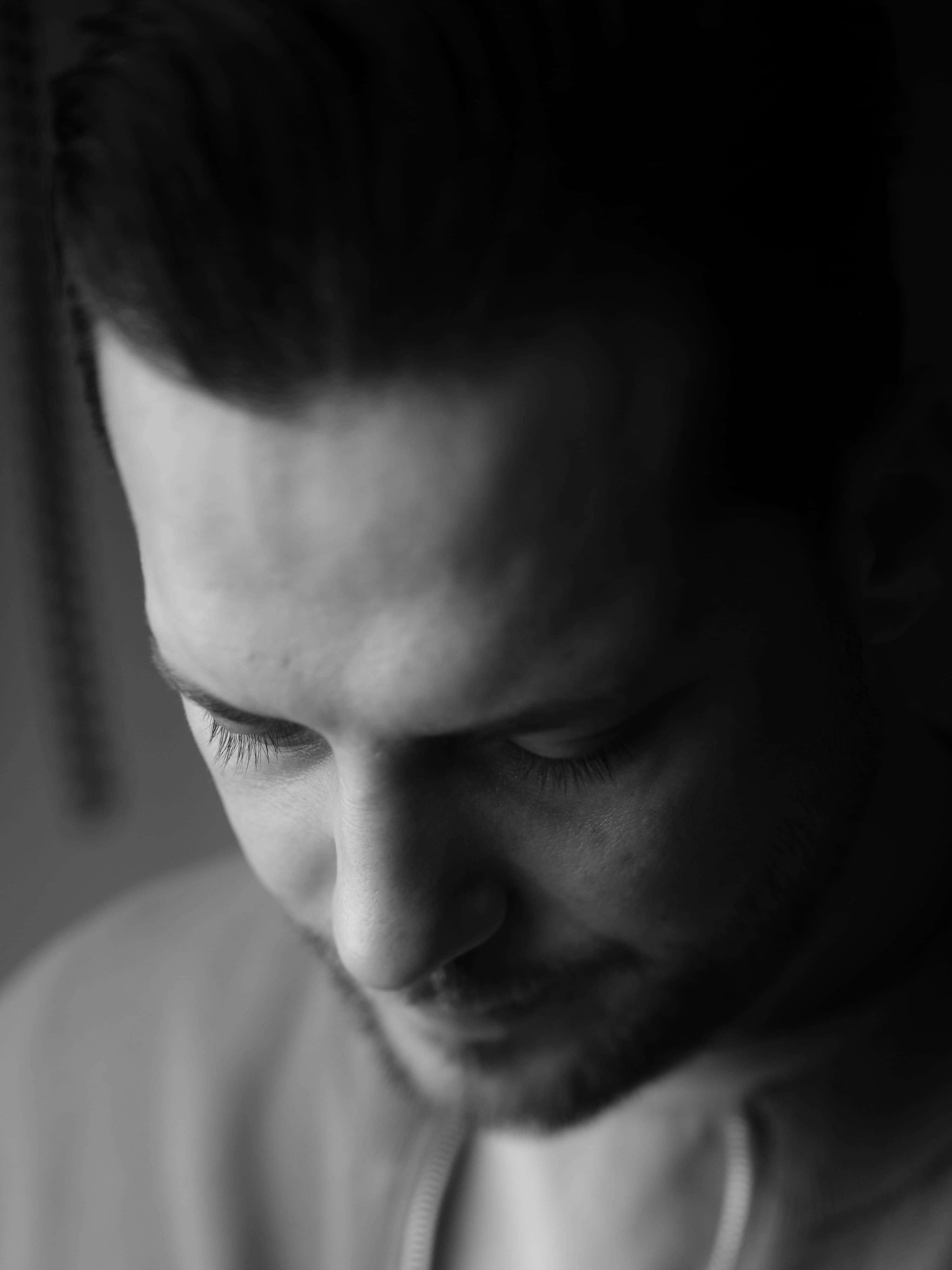
Creative Portrait Photography: The Magic of the Fujifilm GF 110mm f/5.6 T/S
Discover the magic of tilt-shift lenses for portraits. How to create creative sharpness effects through the Scheimpflug principle and real practical examples.